深入掌握 Java CompletableFuture 异步编程
异步任务的创建
在 Java 中,CompletableFuture 提供了灵活的方式来开启异步线程。主要分为无返回值的 runAsync 和有返回值的 supplyAsync。
1. supplyAsync:支持返回值的异步任务
当你需要异步执行一个操作并获取其结果时,应使用此方法。它可以配合默认的 ForkJoinPool 或自定义线程池使用。
// 使用默认线程池
CompletableFuture<String> fetchFuture = CompletableFuture.supplyAsync(() -> {
    // 模拟耗时操作
    return "Data from Remote Service";
});

// 使用自定义线程池
Executor executor = Executors.newFixedThreadPool(4);
CompletableFuture<Integer> calculationFuture = CompletableFuture.supplyAsync(() -> {
    return 42;
}, executor);
2. runAsync:无返回值的异步任务
适用于只需要触发某个异步操作而不需要关心其执行结果的场景。
CompletableFuture<Void> logFuture = CompletableFuture.runAsync(() -> {
    System.out.println("异步日志记录中...");
});
任务回调与链式操作
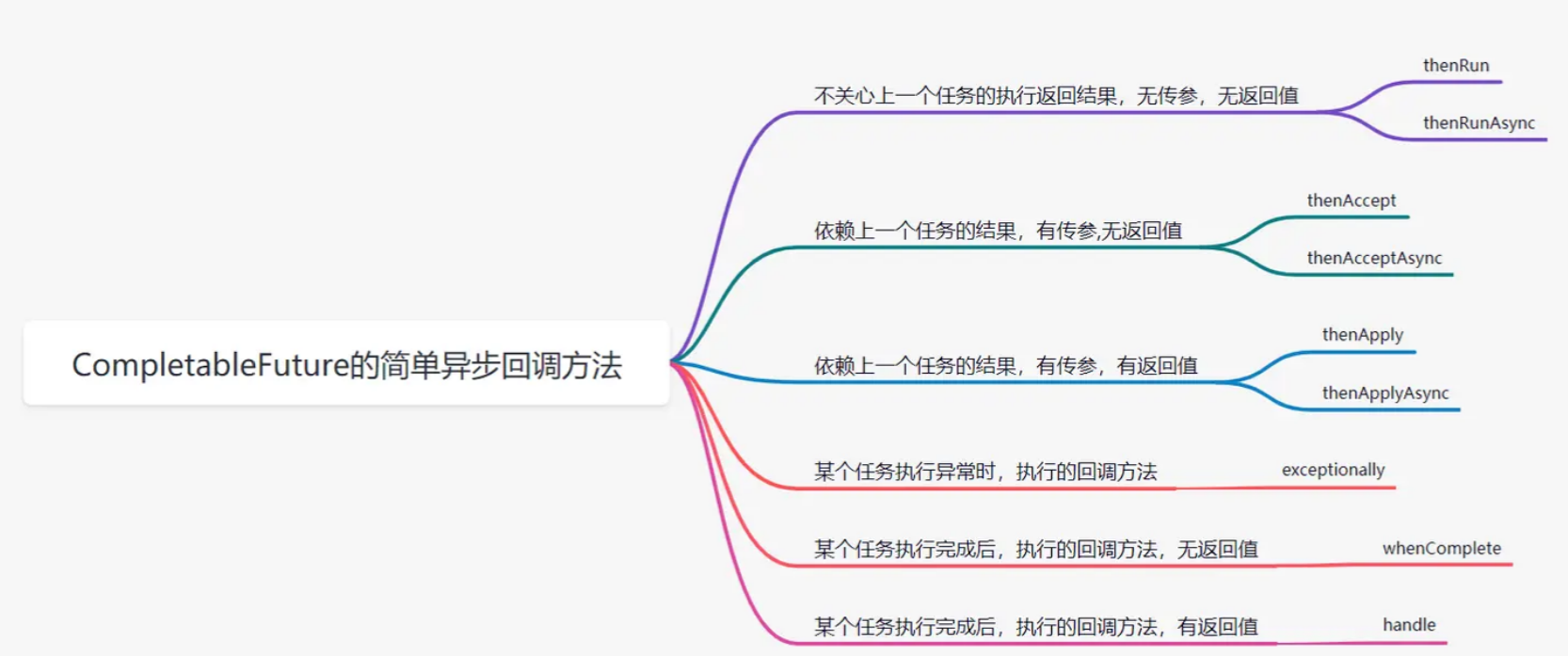
1. thenRun 与 thenRunAsync
在当前任务完成后执行下一步,不接收参数也不返回结果。thenRun 通常在当前线程执行,而 thenRunAsync 会提交到线程池异步执行。
CompletableFuture.supplyAsync(() -> "Task 1")
    .thenRun(() -> System.out.println("Task 1 已完成,开始执行清理工作"));
2. thenAccept 与 thenAcceptAsync
接收上一个任务的输出作为输入,但本身没有返回值。
CompletableFuture.supplyAsync(() -> "Result A")
    .thenAccept(result -> System.out.println("接收到结果: " + result));
3. thenApply 与 thenApplyAsync
最常用的转换操作,接收上一步的结果,处理后返回一个新的结果。
CompletableFuture<Integer> lengthFuture = CompletableFuture.supplyAsync(() -> "Hello World")
    .thenApply(text -> text.length());
异常处理与结果收尾
1. exceptionally
用于捕捉链式调用中抛出的任何异常。如果发生异常,可以通过此方法提供一个默认值或处理逻辑。
CompletableFuture<String> safeFuture = CompletableFuture.supplyAsync(() -> {
    if (true) throw new RuntimeException("Service Failure");
    return "Success";
}).exceptionally(ex -> {
    System.err.println("错误信息: " + ex.getMessage());
    return "Fallback Data";
});
2. whenComplete 与 handle
- whenComplete:在任务完成后触发,接收结果和异常,但无法改变返回结果(返回的仍是上一步的 Future)。
- handle:功能更强大,接收结果和异常,并且可以返回一个新的转换结果。
CompletableFuture<String> resultFuture = CompletableFuture.supplyAsync(() -> "Process")
    .handle((res, ex) -> {
        if (ex != null) return "Error Occurred";
        return res + " Finished";
    });
多任务组合处理
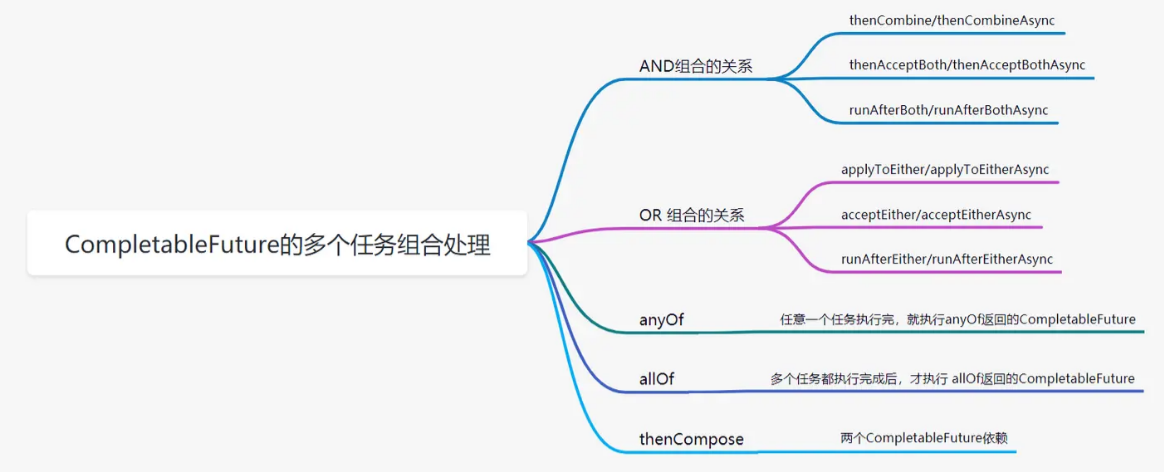
AND 组合关系
只有当两个任务都完成时,才触发后续动作。主要包括 thenCombine(有输入有输出)、thenAcceptBoth(有输入无输出)和 runAfterBoth(无输入无输出)。
CompletableFuture<String> taskA = CompletableFuture.supplyAsync(() -> "Service A");
CompletableFuture<String> taskB = CompletableFuture.supplyAsync(() -> "Service B");

CompletableFuture<String> combined = taskA.thenCombine(taskB, (resA, resB) -> resA + " & " + resB);
OR 组合关系
只要其中一个任务先完成,就执行后续动作。例如 applyToEither 或 acceptEither。
CompletableFuture<String> fastTask = CompletableFuture.supplyAsync(() -> "Fast Result");
CompletableFuture<String> slowTask = CompletableFuture.supplyAsync(() -> {
    Thread.sleep(1000);
    return "Slow Result";
});

fastTask.acceptEither(slowTask, result -> System.out.println("最快的结果是: " + result));
allOf 与 anyOf
- allOf:等待所有 Future 完成。
- anyOf:只要有一个 Future 完成即返回。
CompletableFuture.allOf(f1, f2, f3).join(); // 阻塞直到所有任务结束
最佳实践与注意事项
1. 警惕阻塞操作
get() 方法是阻塞的。在生产环境中,应始终使用带超时时间的 get(long timeout, TimeUnit unit),以防线程永久挂起。
2. 异常屏蔽
如果在异步任务中发生异常且没有显式调用 get() 或处理异常回调,异常可能会被"吞掉"。务必通过 exceptionally 或在获取结果时处理 ExecutionException。
3. 线程池配置
默认的 ForkJoinPool.commonPool() 线程数较少(通常为 CPU 核数 - 1)。对于 IO 密集型任务,建议使用自定义 ThreadPoolExecutor,并合理配置拒绝策略(如 AbortPolicy),避免任务静默丢弃导致无法触发回调。
4. thenCompose 与 thenApply 的区别
如果回调函数本身也返回一个 CompletableFuture,使用 thenApply 会产生嵌套结构(Future 内嵌 Future),而 thenCompose 会将其"扁平化"。
// thenCompose 会展开内部的 Future
CompletableFuture<String> finalResult = firstTask.thenCompose(data -> getSecondTask(data));
