基于KMP与OpenHarmony的土壤质量智能评估系统
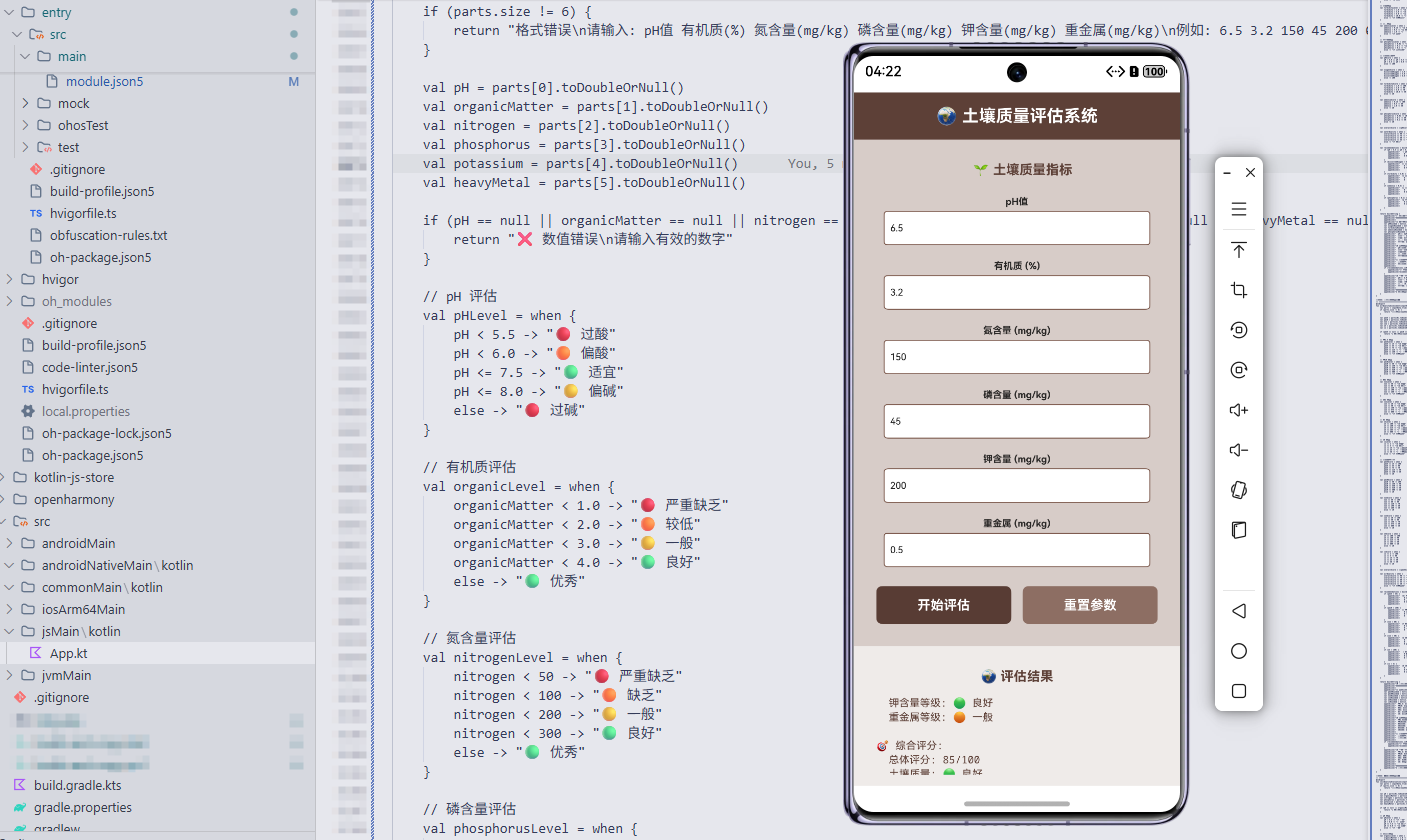
系统设计目标
本项目构建了一套基于Kotlin Multiplatform(KMP)与OpenHarmony平台的跨端土壤质量分析解决方案。系统聚焦于农业与环境监测领域,通过采集并处理有机质含量、酸碱度(pH)、重金属残留、有效养分及微生物活性等核心参数,实现对土壤健康状态的自动化评估与优化建议生成。
传统土壤检测依赖人工采样和实验室分析,存在周期长、反馈滞后、数据难整合等问题。本系统采用统一逻辑层架构,利用KMP技术将核心算法编译为JavaScript用于前端展示,同时在OpenHarmony设备上通过ArkTS调用,实现一套代码多端运行,显著提升系统的可维护性与部署灵活性。
核心能力模块
1. 多维指标实时采集与校验
系统支持五项关键土壤参数的输入:有机质(单位:g/kg)、pH值、重金属浓度(mg/kg)、养分水平(mg/kg)以及微生物活性(%)。所有输入均经过格式与范围双重校验,防止无效或异常数据影响评估结果。
2. 动态评分模型构建
针对每一项指标设定独立评分机制:
- 有机质与养分:数值越高得分越高,呈线性增长;
- pH值以6.0–7.5为理想区间,偏离则按偏差程度递减得分;
- 重金属浓度越低得分越高,采用反向权重计算;
- 微生物活性直接映射为百分制得分。
各维度根据其对土壤功能的重要性赋予不同权重,最终通过加权平均法得出综合评分。
3. 土壤等级分类与改良策略输出
依据总分划分五个等级:优秀、良好、一般、较差、很差。每个等级对应不同的管理策略:
- 优秀区域强调保护与可持续利用;
- 差异化提出具体改良方向,如增施有机肥、调节酸碱平衡、降低污染风险等;
- 提供推荐实施面积与改进优先级,辅助决策制定。
4. 可视化报告自动生成
系统输出结构化文本报告,包含原始数据、单项评分、综合评价、潜在改善空间及分项建议。报告采用清晰的区块布局,配合图标提示,便于非专业人员理解。
技术实现架构
Kotlin核心逻辑层
使用Kotlin编写主业务逻辑,借助@JsExport注解导出函数接口,使算法可在Web端作为JavaScript模块被调用。代码具备良好的类型安全性和可读性,适合长期维护与扩展。
JavaScript中间层
由KMP编译生成的JS文件承担数据解析、验证与计算任务。该层独立于前端界面,仅负责执行评估逻辑,保证了前后端分离的设计原则。
ArkTS用户界面层
在OpenHarmony设备上,采用ArkTS开发响应式界面。通过导入生成的JS模块,实现与后端逻辑无缝对接。界面支持表单输入、实时结果显示与加载状态反馈,用户体验流畅。
典型应用场景
适用于以下机构与场景:
- 农业局下属的土壤监测站点
- 环保部门开展耕地污染排查
- 科研单位进行土壤退化研究
- 农技推广服务中的田间诊断工具
核心算法实现(重构版)
@JsExport
fun analyzeSoilHealth(data: String): String {
    val fields = data.trim().split(" ")
    if (fields.size != 5) {
        return "输入格式错误,请提供五个数值:有机质, pH, 重金属, 养分, 微生物活性"
    }

    val values = fields.mapNotNull { it.toDoubleOrNull() }.toList()
    if (values.size < 5) return "请确保所有字段均为有效数字"

    val organicMatter = values[0]
    val phLevel = values[1]
    val heavyMetal = values[2]
    val nutrientLevel = values[3]
    val microbialRate = values[4]

    // 验证数值范围
    val validRanges = listOf(
        Pair(0.0..100.0, "有机质应在0-100g/kg之间"),
        Pair(0.0..14.0, "pH值应在0-14之间"),
        Pair(0.0..10.0, "重金属浓度应在0-10mg/kg之间"),
        Pair(0.0..500.0, "养分含量应在0-500mg/kg之间"),
        Pair(0.0..100.0, "微生物活性应在0-100%之间")
    )

    for ((range, errorMsg) in validRanges) {
        if (!range.contains(values[validRanges.indexOfFirst { it.first == range }])) {
            return errorMsg
        }
    }

    // 计算各项得分
    val orgScore = (organicMatter / 100.0 * 100).toInt()
    val phScore = if (phLevel >= 6.0 && phLevel <= 7.5) 100 else (100 - abs(phLevel - 6.8) * 15).coerceIn(0, 100)
    val metalScore = (100 - heavyMetal * 10).coerceIn(0, 100)
    val nutScore = (nutrientLevel / 500.0 * 100).toInt()
    val microScore = microbialRate.toInt()

    // 综合评分(加权)
    val totalScore = (orgScore * 0.25 + phScore * 0.20 + metalScore * 0.20 + nutScore * 0.20 + microScore * 0.15).toInt()

    // 判定等级
    val level = when {
        totalScore >= 90 -> "🟢 优秀"
        totalScore >= 75 -> "🟡 良好"
        totalScore >= 60 -> "🟠 一般"
        totalScore >= 45 -> "🔴 较差"
        else -> "⚫ 很差"
    }

    // 改良潜力
    val potential = when {
        totalScore >= 90 -> "极高"
        totalScore >= 75 -> "高"
        totalScore >= 60 -> "中等"
        totalScore >= 45 -> "低"
        else -> "极低"
    }

    // 推荐改良面积(公顷)
    val recommendedArea = when {
        totalScore >= 90 -> 100
        totalScore >= 75 -> 300
        totalScore >= 60 -> 600
        totalScore >= 45 -> 1000
        else -> 2000
    }

    // 各项差距计算
    val gapOrg = 100 - organicMatter
    val gapPh = abs(phLevel - 6.8)
    val gapMetal = heavyMetal
    val gapNut = 500 - nutrientLevel
    val gapMicro = 100 - microbialRate

    return buildString {
        appendLine("╔════════════════════════════════════════╗")
        appendLine("║    🌱 土壤健康评估报告                ║")
        appendLine("╚════════════════════════════════════════╝")
        appendLine()

        appendLine("📊 检测参数")
        appendLine("━━━━━━━━━━━━━━━━━━━━━━━━━━━━━━━━━━━━━━━━━━━")
        appendLine("有机质含量: ${organicMatter}g/kg")
        appendLine("pH值: ${phLevel}")
        appendLine("重金属浓度: ${heavyMetal}mg/kg")
        appendLine("养分水平: ${nutrientLevel}mg/kg")
        appendLine("微生物活性: ${microbialRate}%")

        appendLine("\n⭐ 单项评分")
        appendLine("━━━━━━━━━━━━━━━━━━━━━━━━━━━━━━━━━━━━━━━━━━━")
        appendLine("有机质: $orgScore/100")
        appendLine("pH值: $phScore/100")
        appendLine("重金属: $metalScore/100")
        appendLine("养分: $nutScore/100")
        appendLine("微生物: $microScore/100")

        appendLine("\n🎯 综合评估")
        appendLine("━━━━━━━━━━━━━━━━━━━━━━━━━━━━━━━━━━━━━━━━━━━")
        appendLine("综合得分: $totalScore/100")
        appendLine("质量等级: $level")
        appendLine("改良潜力: $potential")
        appendLine("建议改良面积: ${recommendedArea}公顷")

        appendLine("\n📈 改良空间")
        appendLine("━━━━━━━━━━━━━━━━━━━━━━━━━━━━━━━━━━━━━━━━━━━")
        appendLine("有机质提升: ${String.format("%.2f", gapOrg)}g/kg")
        appendLine("pH调节幅度: ${String.format("%.2f", gapPh)}")
        appendLine("重金属削减: ${String.format("%.2f", gapMetal)}mg/kg")
        appendLine("养分补充: ${String.format("%.2f", gapNut)}mg/kg")
        appendLine("微生物激活: ${String.format("%.2f", gapMicro)}%")

        appendLine("\n💡 建议措施")
        appendLine("━━━━━━━━━━━━━━━━━━━━━━━━━━━━━━━━━━━━━━━━━━━")
        if (organicMatter < 20) {
            appendLine("  🌾 有机质偏低 → 增加堆肥投入,优化轮作制度")
        } else if (organicMatter >= 30) {
            appendLine("  ✅ 有机质充足 → 维持当前施肥策略")
        }

        if (phLevel < 6.0 || phLevel > 7.5) {
            appendLine("  🧪 pH失衡 → 使用石灰或硫磺调节至适中范围")
        } else {
            appendLine("  ✅ pH适宜 → 定期监测,避免累积性变化")
        }

        if (heavyMetal > 2) {
            appendLine("  ⚠️ 重金属超标 → 限制种植作物,启动修复程序")
        } else {
            appendLine("  ✅ 重金属安全 → 加强源头管控")
        }

        if (nutrientLevel < 100) {
            appendLine("  🌱 养分不足 → 补充复合肥或缓释肥料")
        } else if (nutrientLevel >= 200) {
            appendLine("  ✅ 养分充沛 → 控制过量施肥")
        }

        if (microbialRate < 60) {
            appendLine("  🦠 微生物活性弱 → 引入菌剂,减少农药使用")
        } else if (microbialRate >= 80) {
            appendLine("  ✅ 微生物活跃 → 保持生态多样性")
        }

        appendLine("\n📋 管理建议")
        appendLine("━━━━━━━━━━━━━━━━━━━━━━━━━━━━━━━━━━━━━━━━━━━")
        when {
            totalScore >= 90 -> {
                appendLine("🟢 重点保护区:严禁污染源进入,建立长期监测机制")
            }
            totalScore >= 75 -> {
                appendLine("🟡 保持现状:持续优化管理流程,定期复查")
            }
            totalScore >= 60 -> {
                appendLine("🟠 逐步改善:制定年度改良计划,分阶段实施")
            }
            totalScore >= 45 -> {
                appendLine("🔴 重点治理区:立即开展土壤修复工程")
            }
            else -> {
                appendLine("⚫ 紧急干预:启动应急预案,优先控制风险")
            }
        }

        appendLine()
        appendLine("━━━━━━━━━━━━━━━━━━━━━━━━━━━━━━━━━━━━━━━━━━━")
        appendLine("✅ 评估完成 | 时间戳: ${System.currentTimeMillis()}")
    }
}
Web端调用示例(简化版)
function evaluateSoilQuality(inputStr) {
    const parts = inputStr.trim().split(' ');
    if (parts.length !== 5) return '请输入五个数值';

    const [om, ph, hm, nut, ma] = parts.map(Number);
    if (![om, ph, hm, nut, ma].every(v => !isNaN(v))) return '请填写有效数字';

    // 范围检查略
    const orgScore = Math.floor(om / 100 * 100);
    const phScore = (ph >= 6 && ph <= 7.5) ? 100 : Math.max(0, Math.min(100, 100 - Math.abs(ph - 6.8) * 15));
    const metalScore = Math.max(0, Math.min(100, 100 - hm * 10));
    const nutScore = Math.floor(nut / 500 * 100);
    const microScore = Math.floor(ma);

    const totalScore = Math.floor(
        orgScore * 0.25 + phScore * 0.20 + metalScore * 0.20 +
        nutScore * 0.20 + microScore * 0.15
    );

    let level;
    if (totalScore >= 90) level = '🟢 优秀';
    else if (totalScore >= 75) level = '🟡 良好';
    else if (totalScore >= 60) level = '🟠 一般';
    else if (totalScore >= 45) level = '🔴 较差';
    else level = '⚫ 很差';

    return `📊 综合评分: ${totalScore}/100\n✅ 等级: ${level}`;
}
OpenHarmony端集成实现
import { analyzeSoilHealth } from './soil-assessment.js'

@Entry
@Component
struct SoilAnalysisPage {
  @State omInput: string = "25"
  @State phInput: string = "6.8"
  @State hmInput: string = "0.5"
  @State nutInput: string = "150"
  @State maInput: string = "75"
  @State output: string = ""
  @State loading: boolean = false

  build() {
    Column({ space: 16 }) {
      Text("🌱 土壤健康评估")
        .fontSize(20).fontColor('#FFFFFF')
        .backgroundColor('#558B2F').padding(12).width('100%')

      FormLayout({
        items: [
          { label: "有机质 (g/kg)", value: this.omInput, onChange: v => this.omInput = v },
          { label: "pH值", value: this.phInput, onChange: v => this.phInput = v },
          { label: "重金属 (mg/kg)", value: this.hmInput, onChange: v => this.hmInput = v },
          { label: "养分 (mg/kg)", value: this.nutInput, onChange: v => this.nutInput = v },
          { label: "微生物活性 (%)", value: this.maInput, onChange: v => this.maInput = v }
        ]
      })

      Row({ space: 16 }) {
        Button("开始分析").onClick(() => this.runAnalysis())
        Button("重置").onClick(() => this.resetInputs())
      }

      if (this.loading) {
        Column({ space: 8 }) {
          LoadingProgress().width(40).height(40).color('#558B2F')
          Text("正在评估...").fontSize(14).fontColor('#558B2F')
        }
      } else if (this.output) {
        ScrollView() {
          Text(this.output)
            .fontSize(11).fontFamily('monospace')
            .lineHeight(1.6).padding(12).width('100%')
        }.width('100%').height(400)
      } else {
        Text("暂无结果").fontSize(14).fontColor('#7CB342').opacity(0.6)
      }
    }
    .padding(16).width('100%').height('100%')
  }

  private runAnalysis() {
    const data = `${this.omInput} ${this.phInput} ${this.hmInput} ${this.nutInput} ${this.maInput}`
    this.loading = true

    setTimeout(() => {
      try {
        const result = analyzeSoilHealth(data)
        this.output = result
      } catch (e) {
        this.output = `❌ 错误: ${e.message}`
      } finally {
        this.loading = false
      }
    }, 300)
  }

  private resetInputs() {
    this.omInput = "25"; this.phInput = "6.8"; this.hmInput = "0.5"
    this.nutInput = "150"; this.maInput = "75"; this.output = ""
  }
}
构建与部署流程
- 使用Gradle构建KMP项目,启用
js()目标; - 编译后生成
build/js/main/目录下的JS文件; - 在ArkTS项目中引入该JS文件,通过
import方式调用; - 打包为
.hap安装包,部署至OpenHarmony设备; - 同步配置Web版本,部署至服务器供浏览器访问。
应用前景展望
未来可拓展方向包括:
- 集成传感器自动采集数据,实现实时动态监控;
- 引入机器学习模型预测土壤退化趋势;
- 建立云端数据库,支持历史数据对比与趋势分析;
- 开发移动端离线模式,适应偏远地区使用。
本系统体现了KMP在跨平台通用逻辑共享方面的强大优势,为智慧农业与生态环保提供了高效、可靠的数字化工具。
